

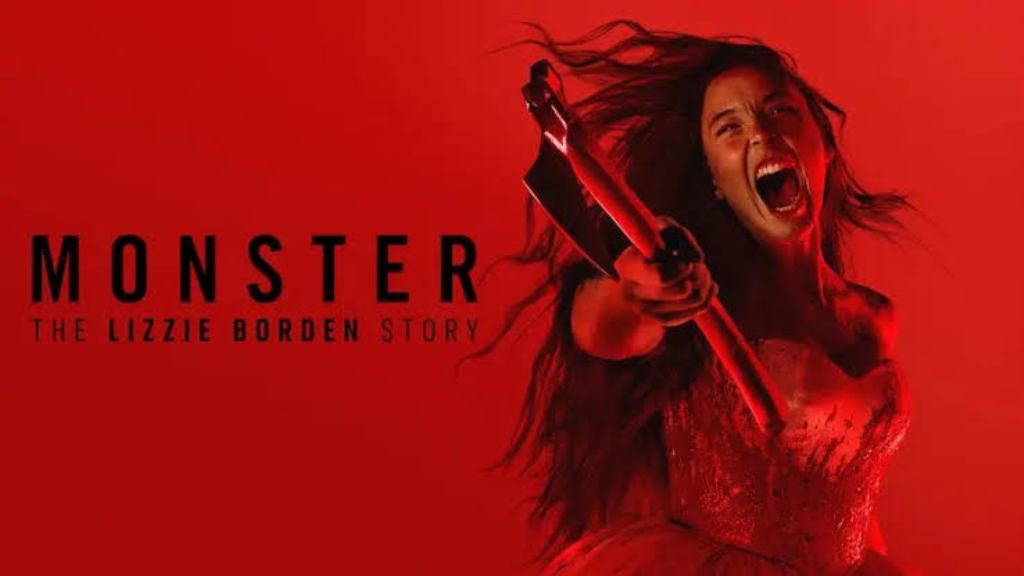
“Monster: The Lizzie Borden Story” shot to the No. 1 spot on the Netflix Top 10 after its debut last week, reaching a strong 12.2 million views in its first four days of streaming.
That puts the project on par with the two most recent editions of Ryan Murphy’s “Monster” anthology; “The Ed Gein Story” opened with 12.2 million views in 2025 and “The Lyle and Erik Menendez Story” opened with 12.3 million in 2024. The first installation, “The Jeffrey Dahmer Story,” remains unbeatable; it premiered in 2022, before Netflix ranked its titles in terms of views, but opened with 196.2 million hours watched, which translates to a whopping 22.3 million views in four days. It remains Netflix’s No. 7 most popular English-language TV series of all time.
According to Netflix, the “Monster” franchise as a whole has reached nearly 170 million views across all seasons.
“Crew Girl” followed “The Lizzie Borden Story” on the chart, taking the No. 2 spot for Sept. 14-20 with 11.3 million views, doubling the 5.2 million views it achieved in its debut week. “The Gentlemen” Season 2 landed in third place with six million views in its third chart week, while catch-up viewing brought Season 1 to fifth place with 3.4 million. Sandwiched in between them in fourth place was the debut of “Gabby’s Dollhouse” Season 14 with 4.3 million views. / Variety
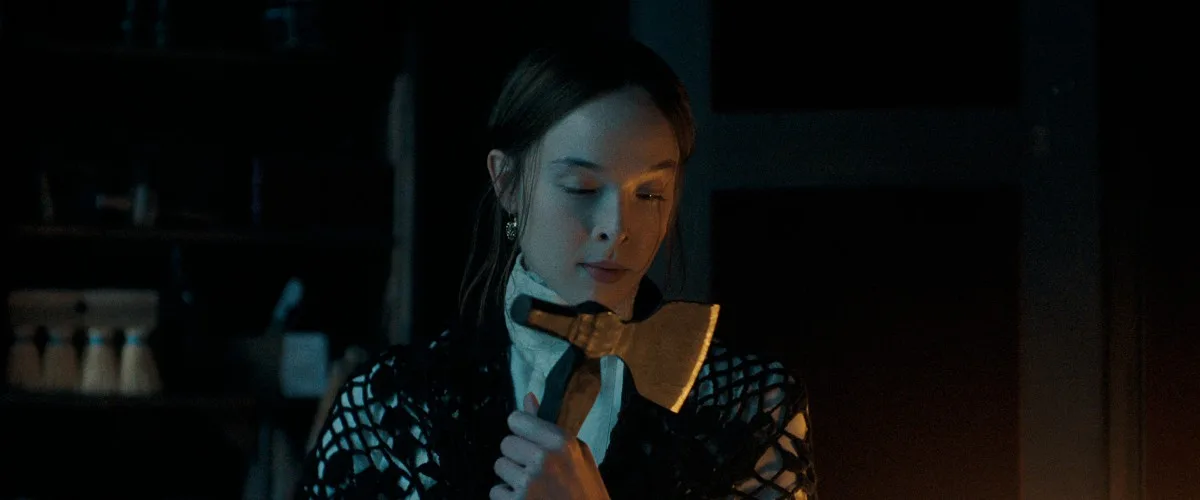
After four installments, Netflix (and Ryan Murphy)’s “Monster” anthology is finally focusing on a female serial killer. Though there are a handful to choose from, it feels warranted that Lizzie Borden would be the first. Like many figures of the pre-serial killer boom in the 1970s and ’80s, Borden’s crimes were never confirmed and unraveled into a public spectacle that made her one of the most famous women in America. It seems poignant to start the female killers off with the woman whose crimes undeniably shaped how society views violent women.
Yet, the Lizzie Borden (Ella Beatty) series gives us one unlike the woman from the stories. Aged down and portrayed as neurodivergent, the woman we see here is immediately easy to empathize with, which may be the show’s first big misstep. Creator Ian Brennan paints a picture of a young woman neglected by her father, Andrew Borden (Charlie Hunnam), and abused by her stepmother Abby Borden (Rebecca Hall). Forced to spend most of her time alone, with only the solace of the birds she cares for, Lizzie’s life seems out of her control. That is, until a friendship with the family’s new maid, Bridget Sullivan (Vicky Krieps), takes root and slowly begins to transform Lizzie’s once-dull life.
Strengthened by this new connection, in which Bridget tells Lizzie stories about her life and shows her the pleasures of masturbation, the two women concoct a plan to murder the Bordens, in the hopes that they may finally find some freedom in a world that hasn’t been overtly kind to either of them. Transforming this series of events into a love story between two women is an intriguing adaptation choice, but it’s also where the problems begin to arise. The show quickly becomes more concerned with making its titular character a modern-day girlboss than with portraying a young woman with flaws of her own. If anything, the series strips her of what could be some fascinating interiority.
The series also goes to great lengths to connect Lizzie to two other historical women, in what is the series’ most impressive metatextual thread. In their days and nights together, Bridget reads Lizzie the fictionalized tales of the real Countess Elizabeth Báthory (also portrayed by Krieps), a 16th-century noblewoman famed for bathing in the blood of virgin girls. Later in the series, Aileen Wuornos (Sarah Paulson) is introduced as a fan of Lizzie’s crimes, even staying at the Borden house on her anniversary with her girlfriend. These stories slowly weave together to map three very different women whose crimes and punishments were revered and consumed by the masses. While it may sound strange, each time these stories cross over, “Monster: The Lizzie Borden Story” works like magic.
The gripping tales of Báthory’s crimes are drenched in the soft orange glow of candlelight and dark recesses of ancient castles, and Wuornos’ story is crafted and performed with such levity it feels unlike anything this anthology has done before. Crafted with care and staggering talent, it’s a shame these two stories act as bookends to Lizzie’s story. They’re fascinating on their own, so much so that whenever these respective women appear on screen, it’s impossible to look away. Then continues the actual story at hand, which isn’t nearly as interesting as it should be. At the end of the day, Lizzie Borden was made famous for bludgeoning her stepmother and father to death with an ax, and this alone should have spawned a series that isn’t as tedious as “Monster: The Lizzie Borden Story” somehow manages to be.
Still, the show has images and performances so captivating that it’s hard to dislike it completely. There’s enough here to keep you watching, mostly in anticipation of seeing another vision of a gothic murderess, or one of America’s most sympathetic female serial killers. But even in Lizzie’s story, you can find life, from gorgeous sets to strange needle drops from The Doors and The Runaways.
If anything, this series is stuffed to the brim with interesting ideas that are often stifled by rewriting history that didn’t need to happen to make the show enjoyable. Instead, Netflix has delivered another rendition of “Monster” that doesn’t quite know what it wants to be and, like the others in this anthology, desperately tries to justify its macabre, compelling existence. / rogerebert
Video