
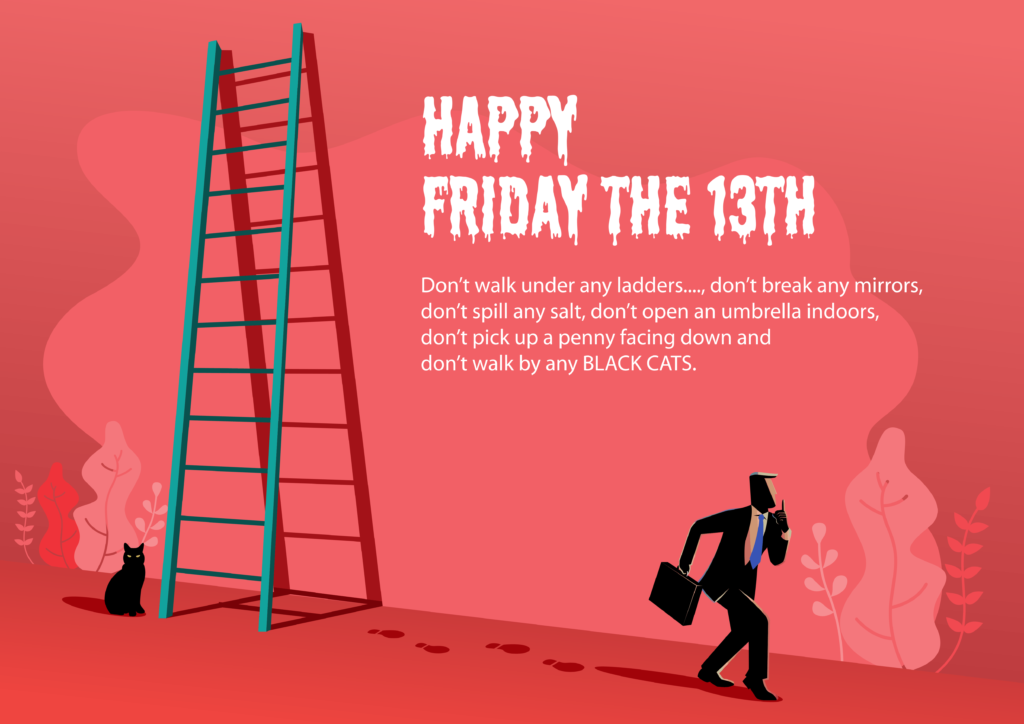
For many, today is no different from any other date on the calendar. For others, however, a date that reads “Friday the 13th” is reason enough to cancel travel plans, delay major business deals, or even avoid leaving the house altogether. Is it merely a coincidence, a harmless urban legend, or a deeply ingrained collective phobia that impacts the daily lives of millions?
The Roots of a Global Myth
The superstition surrounding Friday the 13th was not born overnight. It represents the intersection of two historically separate symbols of bad luck: the number 13 and the day Friday.
In Western culture, the number 12 has historically been viewed as a symbol of completeness — 12 months in a year, 12 hours on a clock face, 12 tribes of Israel, and 12 Apostles. The number 13 disrupts this harmonious balance. In Christian tradition, Judas was the 13th guest at the Last Supper, while Friday became associated with the day of the Crucifixion.
Additionally, one of the most popular historical legends links the superstition to Friday, October 13, 1307, when King Philip IV of France ordered the mass arrest and execution of the Knights Templar. Although historians debate whether this specific event gave rise to the superstition, the story etched itself indelibly into the public imagination.
Triskaidekaphobia: When Superstition Becomes a Condition
In modern psychology, this fear is not treated simply as a colorful quirk. The term triskaidekaphobia describes an irrational, persistent fear of the number 13. When this phobia specifically targets Friday the 13th, it is known by the scientific term paraskevidekatriaphobia.
Psychologists explain that superstitions of this kind are sustained through the mechanism of confirmation bias. If someone loses their keys on an ordinary Tuesday, they attribute it to simple bad luck. If it happens on Friday the 13th, however, they blame it on the day’s supposed curse.
Economic and Social Impact
The effects of this superstition extend beyond psychology into measurable economic realities:
-
Airlines and Travel: Many airlines observe a drop in ticket bookings on these specific dates.
-
Architecture and Real Estate: In numerous skyscrapers, hospitals, and hotels worldwide, the 13th floor is intentionally omitted, with elevator buttons jumping directly from 12 to 14.
-
Boarding Gates & Flight Rows: Several air carriers skip row 13 in their aircraft cabins altogether.
A More Rational Perspective
Statistical studies conducted by insurance companies and road safety organizations consistently show that Friday the 13th sees no higher rate of accidents or catastrophic events than any other day of the year. In fact, some studies reveal a slight decrease in traffic accidents, likely because drivers tend to exercise greater caution out of heightened awareness!
Friday the 13th remains a powerful cultural symbol, continuously fueled by literature, horror cinema, and pop culture. Ultimately, “bad luck” resides far less in the alignment of calendar dates and far more in how we choose to interpret the world around us.
Video
Triskaidekaphobia in Popular Culture: American Horror Story
The psychological intensity of triskaidekaphobia took center stage in modern media with thw TV Series ‘American Horror Story: season 13′. The season anchors its narrative around Ben DeSoto, a hospice caretaker who suffers from an overwhelming, pathologically debilitating fear of the number 13.
Rather than treating the condition merely as a passive background detail or a quirky superstition, the show weaponizes triskaidekaphobia into a primary engine of suspense. By placing a protagonist paralyzed by this specific phobia into surreal scenarios—such as navigating eerie residential buildings like The Apollyon or boarding a flight on Friday the 13th in row 13—the series highlights how deeply the fear of an abstract number can distort perception and drive terror in contemporary horror storytelling.
For a deeper dive into how this psychological terror is analyzed by fans, you can watch AHS 13 Explained: Ben’s Fear of 13 Was Never a Phobia, which breaks down the character’s internal struggle and the narrative significance of triskaidekaphobia throughout the season -linked to the anticrhrist and the parametres of satanism.
Video AHS