

It has never been more important to be a polite and respectful traveller. But how do you ask nicely when there is no equivalent word for “please”?
I’m in a Copenhagen bakery, standing in line for sugar-dusted slices of lemon cake, delicately plaited cardamom buns and golden-brown cinnamon swirls. When I reach the front of the queue, I’m ready to order in simple Danish. But then I hit a snag: in this country, there is no single word that works quite like the English “please”.
Like a lot of people, when I travel I learn the basics of hello, goodbye, yes, no, please and thank you. But that’s just not possible in Danish, Swedish, Norwegian, Icelandic or Finnish, where there is no catch-all word that works in quite the same way.
So, what’s going on? Are Nordic speakers simply more direct, or is politeness being expressed in ways outsiders may not immediately recognise? For travellers, understanding the difference can make everyday interactions much easier to navigate.
Politeness can vary
The first thing to understand, says linguist Dr James Puchowski, a researcher at the Nynorsk Kultursentrum (The Norwegian Museum of Written Culture), is that looking for a direct translation of “please” may be the wrong place to start.
Danes, for example, might ask for a pastry in a bakery using the words må jeg bede om – “may I ask for” – as a way to signal manners. In Sweden, a speaker might add tack (thank you) on to the request; while in Norway, politeness might be conveyed with an uplift to the end of the request and a smile.
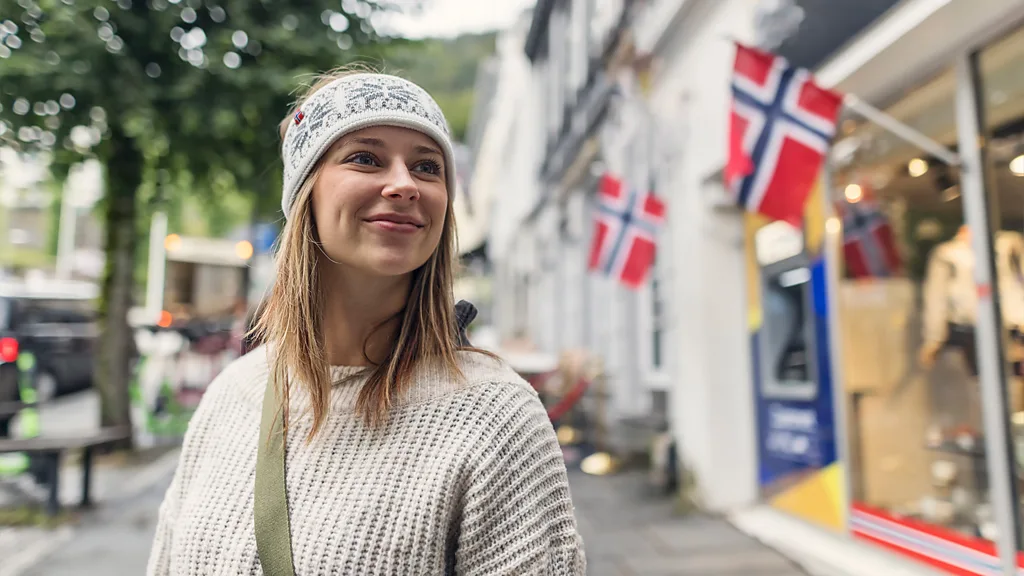
 Getty Images – Across the Nordic nations, politeness is often conveyed through tone, phrasing and context (Credit: Getty Images)
Danish language teacher Daniela Hummelgren says directness is part of the communication style. “Efficiency is valued here and communication is generally direct,” she says. Being extra polite might be seen as annoying if it slows a process down.
But are they being rude?
Puchowski sees these differences as a reflection of societal structure. In Nordic countries, he explains, egalitarianism is prized and distinctions between people are less strongly marked in everyday speech. For example, more formal forms of address like Herr and Frue (Sir and Madam) have largely fallen out of everyday use – a reflection of how they see themselves as more equal and less defined by class.
This egalitarian streak is often associated with Jante’s Law, the Scandinavian idea that nobody should consider themselves more special or important than anyone else. In everyday interactions, Puchowski says, that can mean less emphasis on signalling status. Politeness may therefore rely less on a deferential word like “please”, and more on phrasing, tone and context.
Similar social norms extend across the region, including Finland, despite Finnish belonging to a separate language family from Danish, Swedish, Icelandic and Norwegian.
“Language is more than words,” Puchowski said. “It’s also about how you present an idea.”
Polite without saying please
Hummelgren says visitors should take their cues from the people around them. “You need to calibrate the level of politeness of where you are,” she said. “Observe the situations around you, so you can get accustomed to the level of what is polite and what is not.” Even without speaking the language, travellers can pay attention to tone, body language and how people address service staff and strangers.
 Getty Images
In Sweden, one simple option is to add tack – “thank you” – to a request. Research into the Swedish tack links its use to equality and reciprocity, rather than deference. The same basic word is used across much of the region: tak in Danish and takk in Norwegian and Icelandic, while Finnish speakers use kiitos to say thanks.
But visitors needn’t worry too much about getting it wrong. Nobody will tut or give you a dark look if you order a coffee without saying “tak“.
In fact, Hummelgren says that being excessively polite can itself seem unusual – and even read as suspicious. “I’ve never heard of anyone sending a physical thank you card after a job interview or something similar,” she said. “It would read as a bit over the top and perhaps like you are looking for favours.”
For travellers, the lesson is that politeness does not always depend on the same words or rituals. You may not hear “please” – but that doesn’t mean politeness is missing. -bbc