
Gabriel García Márquez’s “One Hundred Years of Solitude”: The “Unfilmable” Book Arrives with Season 2 on Netflix
Adapting one of the greatest literary masterpieces of the 20th century for the small screen felt for decades like an impossible feat. Gabriel García Márquez’s One Hundred Years of Solitude was considered by many to be an “unfilmable” book, primarily because its magic rests not merely on its plot, but on its original language, internal rhythm, and the masterfully crafted magical realism that permeates every page. The Netflix production, shot entirely in Colombia and in Spanish, takes on this challenge with rare respect and aesthetic boldness.
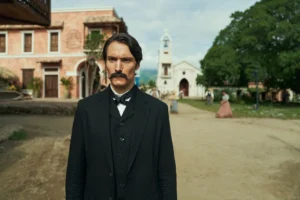
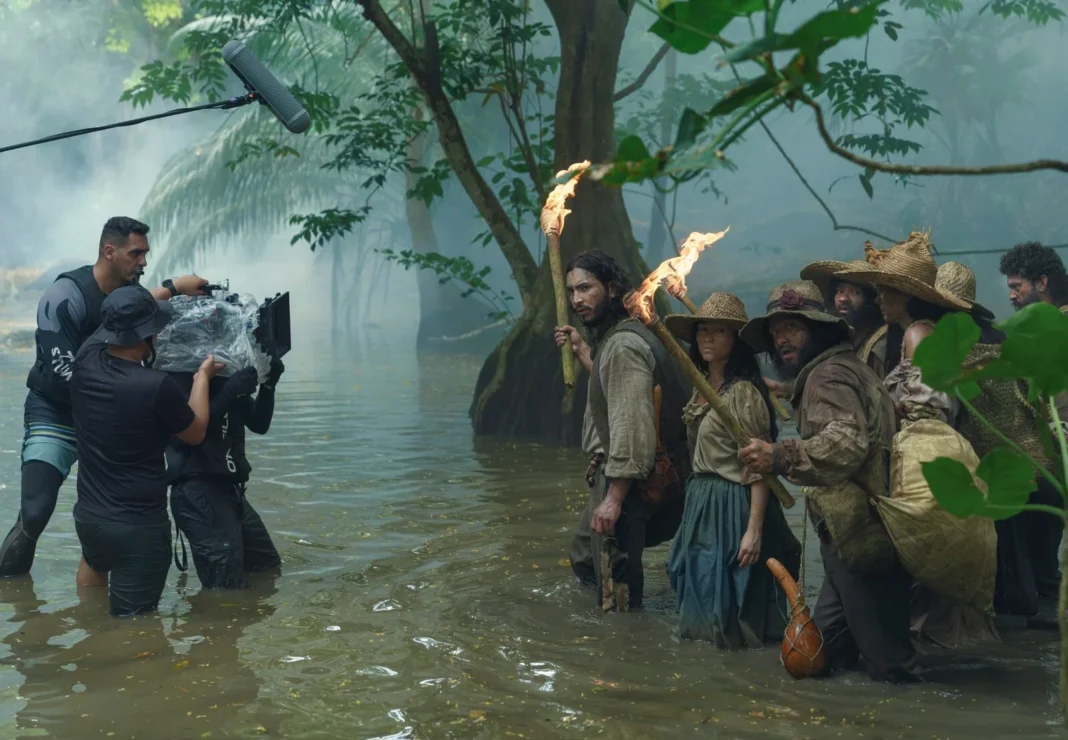
From its very first minutes, the series manages to capture the atmosphere of the legendary Macondo. The direction and cinematography transform the isolated village of the Buendías into a living organism, where light, the humidity of the jungle, and the dust of time become autonomous characters. The visual rendering of magical realism is executed with restraint: paradoxical and supernatural events are not treated as flashy special effects, but as natural, everyday manifestations of the characters’ lives—exactly as the Colombian author’s style dictates.
On the script level, the adaptation expertly manages the cyclical nature of time and the endless repetition of names and destinies across generations. The narrative preserves the melancholic, almost allegorical texture of the book, capturing the tragedy of a family condemned to live in eternal isolation. Character development—from the visionary and borderline-insane spirit of José Arcadio Buendía to the stoic, cohesive strength of Úrsula—is portrayed with emotional depth.
The performances of the cast stand out for their authenticity. The decision to cast Colombian actors provides an earthy truth that protects the work from slipping into a touristy or superficial representation. The combination of the traditional musical score with the meticulously crafted production design reinforces the sense that the viewer is transported to a world outside real time.
Of course, no audiovisual adaptation can fully replace the poetic power of Márquez’s written word. Certain thematic and philosophical nuances are inevitably simplified to serve the demands of a television narrative flow. Nevertheless, the series achieves what matters most: it does not attempt to modernize or distort the spirit of the original, but instead functions as a sincere and visually captivating tribute.
One Hundred Years of Solitude on Netflix is a landmark television moment. It succeeds in transforming isolation, human vanity, and the beauty of Latin American fiction into an immersive experience that honors the memory of its creator.
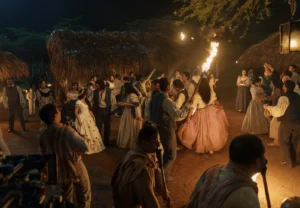
Character Comparison
Translating Gabriel García Márquez’s complex characters to the Netflix series represents one of the adaptation’s greatest challenges. In the book, the characters function not only as distinct individuals, but as symbols and carriers of fate’s cyclical nature. The series approaches the main figures by bringing them to life in flesh and blood, while preserving the foundational pillars of their personalities.
1. José Arcadio Buendía (The Patriarch)
-
In the Book: An obsessive, visionary, and brilliant man whose relentless curiosity about science and alchemy gradually leads him to madness and isolation.
-
In the Series: The show exceptionally conveys the character’s passion and childlike innocence. His transition from the leading figure of Macondo to a tragic old man disconnected from reality is executed in a deeply moving way, emphasizing his existential dead end.
2. Úrsula Iguarán (The Matriarch)
-
In the Book: The backbone of both the family and the village. She is the ultimate embodiment of logic, practicality, and survival, fighting in vain to hold the family together against the curse of solitude.
-
In the Series: Úrsula’s portrayal is one of the production’s strongest highlights. She is rendered as a sturdy, grounded presence with inexhaustible inner strength. Her gradual aging and loss of sight are depicted with respect, maintaining her stature as the sole voice of reason in the house.
3. Colonel Aureliano Buendía
-
In the Book: Quiet and perceptive as a child, he transforms into a cold, ruthless military leader of 32 lost rebellions, only to end up an isolated man crafting tiny golden fish.
-
In the Series: The challenge here was conveying his internal coldness. The series focuses on the gradual erosion of his emotional humanity caused by war. The viewer clearly sees how political ideology ultimately deteriorates into a personal, dark obsession.
4. Melquíades (The Gypsy / Sage)
-
In the Book: An almost mystical figure who brings inventions to the world of Macondo and writes the prophetic parchments that determine the destiny of the Buendías.
-
In the Series: His depiction retains his enigmatic and nearly immortal nature. The character design and surrounding atmosphere enhance the element of magical realism, making him appear as a bridge between the real and supernatural worlds.
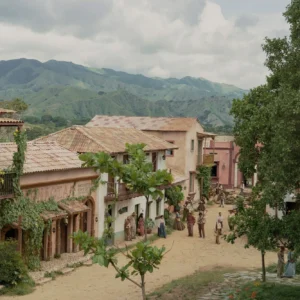
Magical Realism
Magical Realism is the foundation upon which the entire world of One Hundred Years of Solitude is built. The defining difference between the written word and the visual adaptation lies in how the audience perceives the paradox: in the book, magic is born through language, whereas in the Netflix series, it translates into imagery and atmosphere.
1. Magical Realism in the Book (The Power of the Word)
In the novel, García Márquez does not treat supernatural occurrences as “miracles,” but as simple, everyday events.
-
Naturalness of the Narrative: The narrative voice describes a woman ascending into the heavens (Remedios the Beauty) or a river of blood flowing through the town with the same unruffled seriousness it would use to describe baking bread.
-
Magic as Metaphor: Paradoxical events serve as allegories for history, memory, and emotion. For instance, four years of continuous rain symbolize collective depression and oblivion following a massacre.
-
The Inversion: Things that are mundane to us (ice, magnets, cinema) are treated by the inhabitants of Macondo as supernatural wonders, whereas a priest levitating is viewed as something ordinary.
2. Magical Realism in the Series (Visual Effects & Direction)
The challenge for the Netflix series was to convey these elements without turning the show into a Hollywood-style fantasy movie.
-
Organic Effects over CGI Blockbuster Spectacle: The directors avoided the overly slick finish of modern digital effects. The effects are subtle, grounded, and integrated into the natural Colombian landscape, preserving a handcrafted and organic feel.
-
Character Reactions: Just as in the book, the actors do not react with shock or awe to supernatural phenomena. When yellow butterflies appear or when the rain will not stop, the characters carry on with their lives, effectively transporting the novel’s atmosphere onto the screen. / Peggy D.
Video